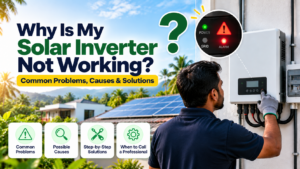
Why Is My Solar Inverter Not Working? Common Problems, Causes & Solutions
Solar inverter not working is one of the most common problems a solar system owner may notice. You may see zero generation, an error message, repeated shutdowns, or an inverter display that is completely off.
The good news is that an inverter problem does not always mean the inverter has failed. Grid issues, low sunlight, overheating, communication problems, protection settings, and electrical faults can all affect solar generation.
Before assuming that your solar panels need replacement, check what the inverter is showing and identify the type of problem.
What Does a Solar Inverter Do?
A solar inverter converts the DC electricity produced by solar panels into AC electricity that your home or business can use.
In a grid connected solar system, the inverter also monitors the electricity supply and protects the system when grid conditions are outside its permitted operating range.
This means an inverter problem can stop or reduce the usable electricity produced by an otherwise healthy solar panel system.
Why Is My Solar Inverter Not Working?
If your solar inverter is not working, the cause can range from a simple operating issue to a technical fault.
The most common causes include:
1. Grid Power Failure
Grid connected inverters normally stop exporting electricity when the grid supply is unavailable.
What you can check:
See whether normal electricity is available at your property.
If the grid is working but the inverter continues showing a grid fault, contact a qualified technician.
2. Inverter Is Switched Off
The inverter or an associated isolation switch may have been switched off during maintenance or electrical work.
Check only clearly labelled external switches. Do not open the inverter or touch electrical terminals.
3. Inverter Error or Fault Code
A solar inverter showing an error has detected an abnormal operating condition.
Common categories include:
-
Grid fault
-
Overvoltage
-
Undervoltage
-
Overtemperature
-
DC fault
-
Isolation fault
-
Frequency error
-
Communication error
Record the exact message and check the manufacturer’s manual. Error meanings vary between brands and models.
4. DC or AC Isolator Problem
A switched off or tripped isolator can prevent the inverter from receiving solar power or exporting electricity.
You can visually check accessible, labelled switches. Electrical testing and repairs should be handled by a qualified professional.
5. Low Solar Generation
Sometimes the inverter is working normally but there is not enough sunlight.
Cloud, rain, shading, early morning, evening, and seasonal changes can reduce generation.
Compare the current output with your system’s normal production under similar conditions.
6. Grid Voltage or Frequency Problems
An inverter continuously monitors grid voltage and frequency.
If these conditions move outside the inverter’s operating limits, it may disconnect temporarily.
This can cause repeated grid errors or make the inverter appear to be malfunctioning.
7. Overheating
Poor ventilation, blocked airflow, high ambient temperatures, or an unsuitable installation environment can cause an inverter to become too hot.
Some inverters reduce output or shut down temporarily to protect themselves.
Keep the area around the inverter clear and arrange professional inspection if overheating happens repeatedly.
8. Communication Problems
Your monitoring app may show the system as offline even when the inverter is still producing electricity.
The problem could be related to:
-
Wi-Fi
-
Internet connection
-
Data logger
-
Communication cable
-
Monitoring device
Check the inverter display before assuming that the solar system has stopped working.
9. Loose or Damaged Connections
Damaged or faulty electrical connections can cause intermittent generation, inverter faults, or complete shutdown.
Do not attempt to repair or tighten solar cables yourself. DC side electrical work should only be performed by a qualified professional.
10. Internal Inverter Fault
An internal component failure may cause repeated shutdowns, persistent error messages, unusual sounds, or complete loss of output.
Internal inverter repairs require professional diagnosis.
Solar Inverter Troubleshooting: What Can You Safely Check?
If your solar inverter is not working, follow these basic checks before calling a technician.
Step 1: Check the Inverter Display
Is the display on, showing normal operation, or showing an error?
Step 2: Check Grid Power
Make sure electricity is available at your property.
Step 3: Check the Error Message
Write down the exact warning or fault code.
Step 4: Check Solar Generation
Use the inverter display or monitoring application to see whether the system is producing electricity.
Step 5: Check the Monitoring App
If the app says “offline”, compare it with the physical inverter display. The issue may only be communication-related.
Step 6: Look for a Pattern
Note whether the problem occurs during:
-
Very hot weather
-
Heavy rain
-
Certain times of day
-
High grid usage
-
Particular periods of the day
Step 7: Contact a Solar Technician
If the problem continues, professional inspection is the safest option.
Never open the inverter, remove covers, touch electrical terminals, bypass protection devices, or attempt high voltage/DC repairs yourself.
Common Solar Inverter Error Messages
| Error / Warning | Possible Meaning | Recommended Action |
|---|---|---|
| Grid Fault | Abnormal grid condition | Check grid supply and contact technician if persistent |
| Overvoltage | Voltage above permitted range | Arrange professional inspection |
| Undervoltage | Voltage below permitted range | Check grid conditions |
| Overtemperature | Inverter temperature is too high | Check ventilation and seek service if recurring |
| DC Fault | Problem on solar/DC side | Contact a qualified technician |
| Isolation Fault | Possible insulation problem | Do not handle electrical connections |
| Frequency Error | Grid frequency outside operating range | Seek professional diagnosis |
| Communication Error | Monitoring/data connection problem | Check communication and monitoring system |
Exact error codes vary by manufacturer and model, so always refer to the inverter’s specific documentation.
Solar Inverter Is ON but Not Producing Power
An inverter being switched on does not necessarily mean it is generating electricity.
If your solar inverter is on but not producing power, possible causes include:
-
Low sunlight
-
Grid failure
-
Grid voltage problems
-
DC-side fault
-
AC-side fault
-
Protection mode
-
Internal inverter fault
-
Monitoring problem
The important distinction is between the inverter being powered on and actually converting solar energy into AC electricity.
If the inverter shows normal operation but generation remains at zero during good sunlight, the system should be investigated.
Why Is My Solar Inverter Showing an Error?
A solar inverter showing an error is usually responding to a condition it has detected.
The error may be related to the grid, temperature, solar input, electrical isolation, frequency, communication, or an internal component.
Do not immediately reset the inverter repeatedly. Record the error and check the manufacturer’s instructions.
If the same error keeps returning, professional inspection is recommended.
Why Does My Solar Inverter Keep Restarting?
A solar inverter that keeps restarting may be responding to unstable grid conditions, overheating, protection mechanisms, DC-side problems, or an internal fault.
Occasional disconnection can occur when grid conditions are abnormal.
Repeated restarting under normal conditions should be investigated by a qualified technician.
Solar Inverter Display Is Completely OFF
If the inverter display is completely blank:
-
Check whether electricity is available.
-
Check for visible status indicators.
-
Check accessible, clearly labelled external switches.
-
Check your monitoring application.
-
Contact your installer if the inverter remains inactive.
Do not remove the inverter cover to investigate.
When Should You Call a Solar Inverter Technician?
Professional solar inverter service is recommended when you notice:
-
Burning smell
-
Smoke
-
Sparks
-
Repeated fault codes
-
Water ingress
-
Physical damage
-
Persistent shutdown
-
Unusual electrical sounds
-
Repeated loss of generation
-
Suspected DC-side problems
If you notice smoke, sparks, burning, or water entering electrical equipment, do not touch the inverter. Move away from the equipment and contact a qualified professional.
For residential and commercial solar systems in Kerala, professional inspection is especially important when the issue involves the inverter, grid connection, protection equipment, or KSEB connected electrical system.
How to Prevent Solar Inverter Problems
Regular solar inverter maintenance can help identify problems early.
-
Keep ventilation areas clear.
-
Monitor solar generation regularly.
-
Pay attention to inverter warnings.
-
Inspect for visible damage or moisture.
-
Keep the inverter area unobstructed.
-
Follow the manufacturer’s maintenance instructions.
-
Arrange professional servicing when faults repeatedly occur.
Monitoring your system regularly is particularly useful because a change in generation can sometimes reveal a problem before the inverter completely stops working.
Frequently Asked Questions
Why is my solar inverter not working?
A solar inverter not working can be caused by a grid failure, inverter shutdown, error condition, overheating, DC or AC fault, communication problem, or internal component failure.
Why is my solar inverter not turning on?
Check whether electricity is available and whether the inverter has any visible status indication. If the display remains off, contact a qualified solar technician.
Why is my solar inverter showing an error?
The inverter has detected an abnormal condition. Check the exact error message in the manufacturer’s manual. Persistent errors require professional diagnosis.
Why is my inverter on but not generating power?
The inverter may be waiting for sufficient sunlight or acceptable grid conditions. Other possibilities include DC-side, AC-side, or internal inverter faults.
How do I reset a solar inverter?
Reset procedures depend on the inverter brand and model. Follow the manufacturer’s instructions rather than repeatedly switching the equipment on and off.
Can a faulty inverter reduce solar generation?
Yes. A faulty inverter can reduce or completely stop the conversion of electricity generated by the solar panels.
Should I turn my solar inverter off?
Do not turn it off simply because generation appears low. First identify the cause and follow the manufacturer’s shutdown procedure if necessary.
Can a power cut affect my solar inverter?
Yes. A grid connected inverter normally disconnects from the grid during a power cut. This is a normal safety function and does not necessarily indicate an inverter failure.
When should I call a solar inverter technician?
Call a qualified technician for repeated errors, persistent shutdowns, burning smells, sparks, water ingress, physical damage, unusual sounds, or suspected electrical faults.
If your solar inverter is not working, don’t immediately assume that the entire solar system has failed. Start with the safe checks above, identify what the inverter is displaying, and seek professional help when the problem involves electrical faults or repeated shutdowns.
A qualified solar professional can determine whether the issue is related to the inverter, solar panels, grid supply, protection equipment, or another part of the system.